



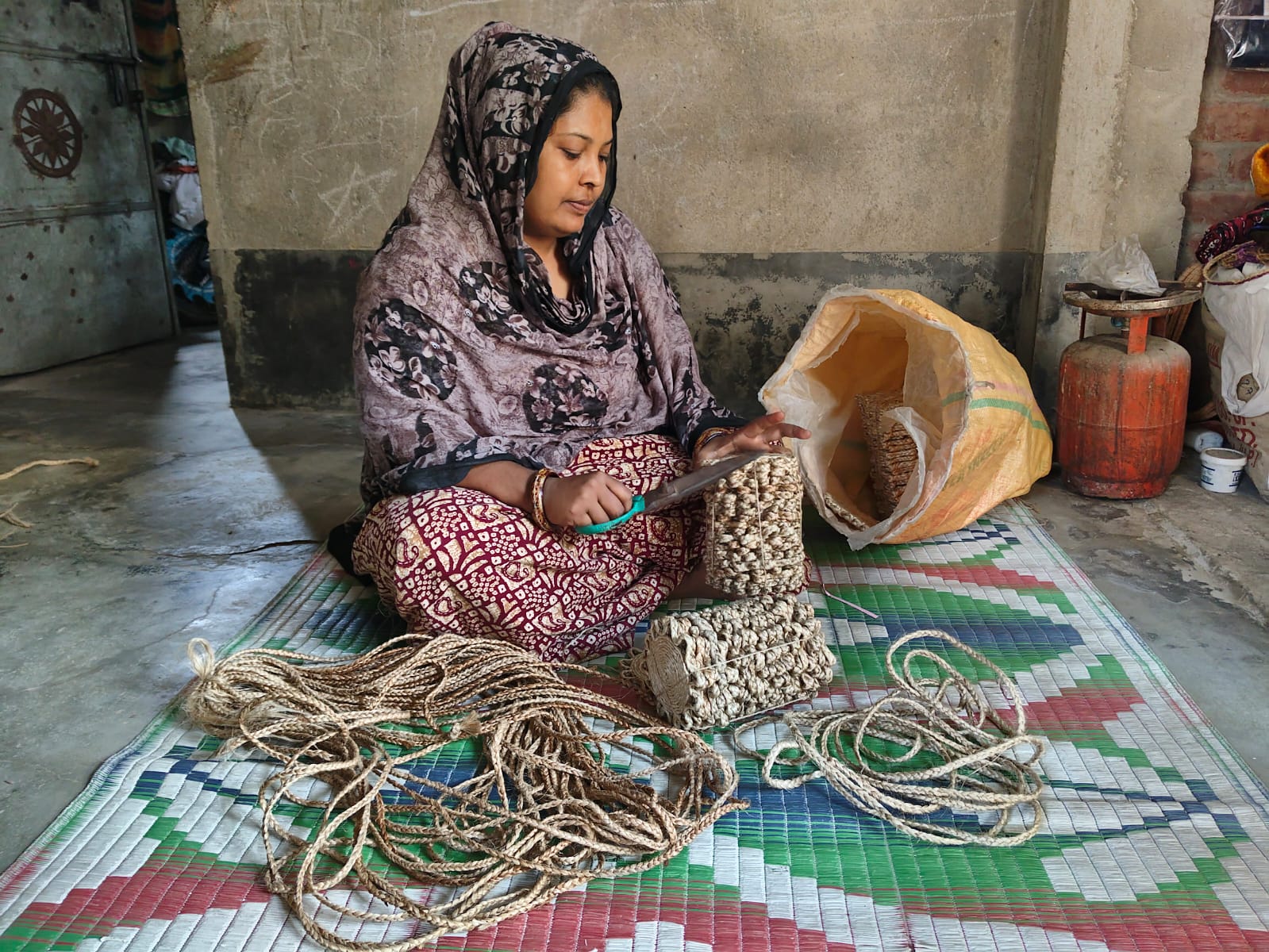
“Receiving the Artisan Card has given us a new identity and confidence. Earlier, we were making jute products but had no formal recognition. Now we can access government schemes, trainings, and bigger market opportunities. This support has encouraged us to dream bigger for our future,” shares a Rural Woman Entrepreneur from the Herampur Jute Cluster in Murshidabad.
In the Herampur Jute Cluster of Raninagar-I Block, Murshidabad, several rural women artisans have long been engaged in traditional jute handicraft work as a source of livelihood. Despite their skills and contribution to the local economy, many women lacked formal recognition as artisans, limiting their access to government entitlements, financial support, and institutional opportunities.
Understanding these challenges, Soochnapreneur Business Mitra Masuda Bibi stepped forward to support the women artisans in navigating the process of obtaining Artisan Cards through the District Industries Centre (DIC). Sixteen Rural Women Entrepreneurs (RWEs) from the cluster were identified and guided throughout the process — from documentation collection and application filing to regular follow-ups with concerned departments.
For many of these women, the process of engaging with government systems was unfamiliar and often intimidating. With continuous handholding and support, they were able to successfully secure their Artisan Cards, giving them formal recognition as skilled artisans for the first time.
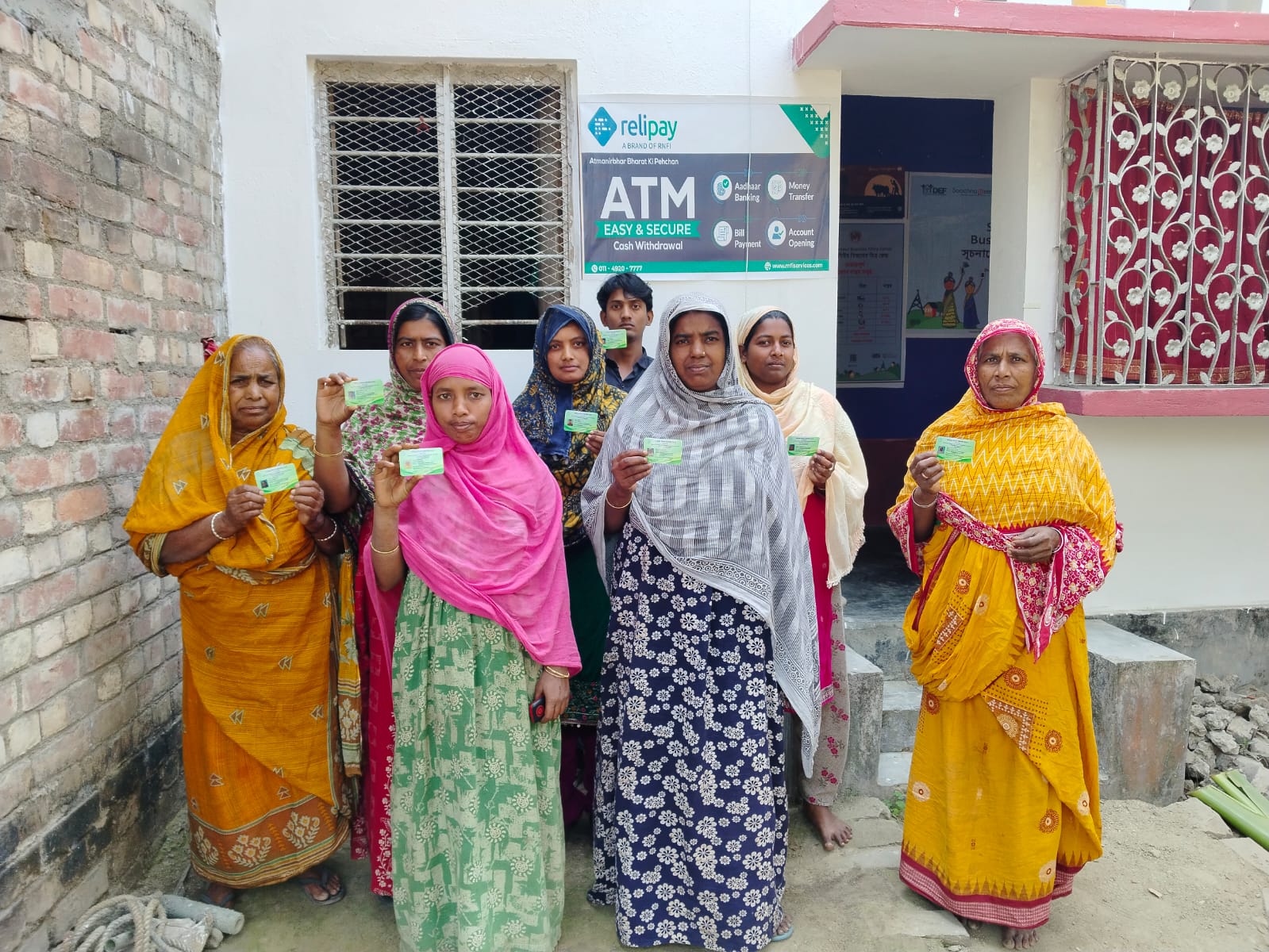
The issuance of the Artisan Cards has become a significant milestone for the women of the cluster. With official recognition, they now have improved access to government schemes, skill development trainings, financial assistance, and wider market opportunities that can help strengthen and expand their jute enterprises.
Beyond access to services, the initiative has also helped build confidence and visibility among the women artisans. Their recognition is encouraging more women in the community to come forward, organise collectively, and participate in strengthening the local jute handicraft value chain.
Through grassroots leadership and community-based support, the Udyamini Program continues to bridge the gap between rural entrepreneurs and government entitlements. By enabling women artisans to access institutional opportunities and formal recognition, the program is creating pathways for sustainable livelihoods and long-term economic empowerment at the grassroots level.