



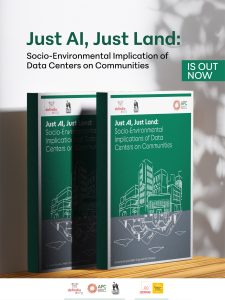
 As artificial intelligence, cloud technologies, and digital economies continue to expand rapidly across the world, the physical infrastructure powering these systems often remains invisible in mainstream conversations. Behind every digital service lies a growing network of data centers that require vast amounts of land, water, energy, and resources. While these developments are frequently associated with innovation and economic growth, their impact on local communities and ecosystems is rarely examined closely.
In response to this growing gap, the Digital Empowerment Foundation (DEF), with the support of the Association for Progressive Communications (APC) and knowledge partners Commons Collective and the AI & Planetary Justice Alliance, has launched Just AI, Just Land: Socio-Environmental Implications of Data Centers on Communities — a research report that explores how expanding digital infrastructure is reshaping everyday realities for communities in Telangana, India.
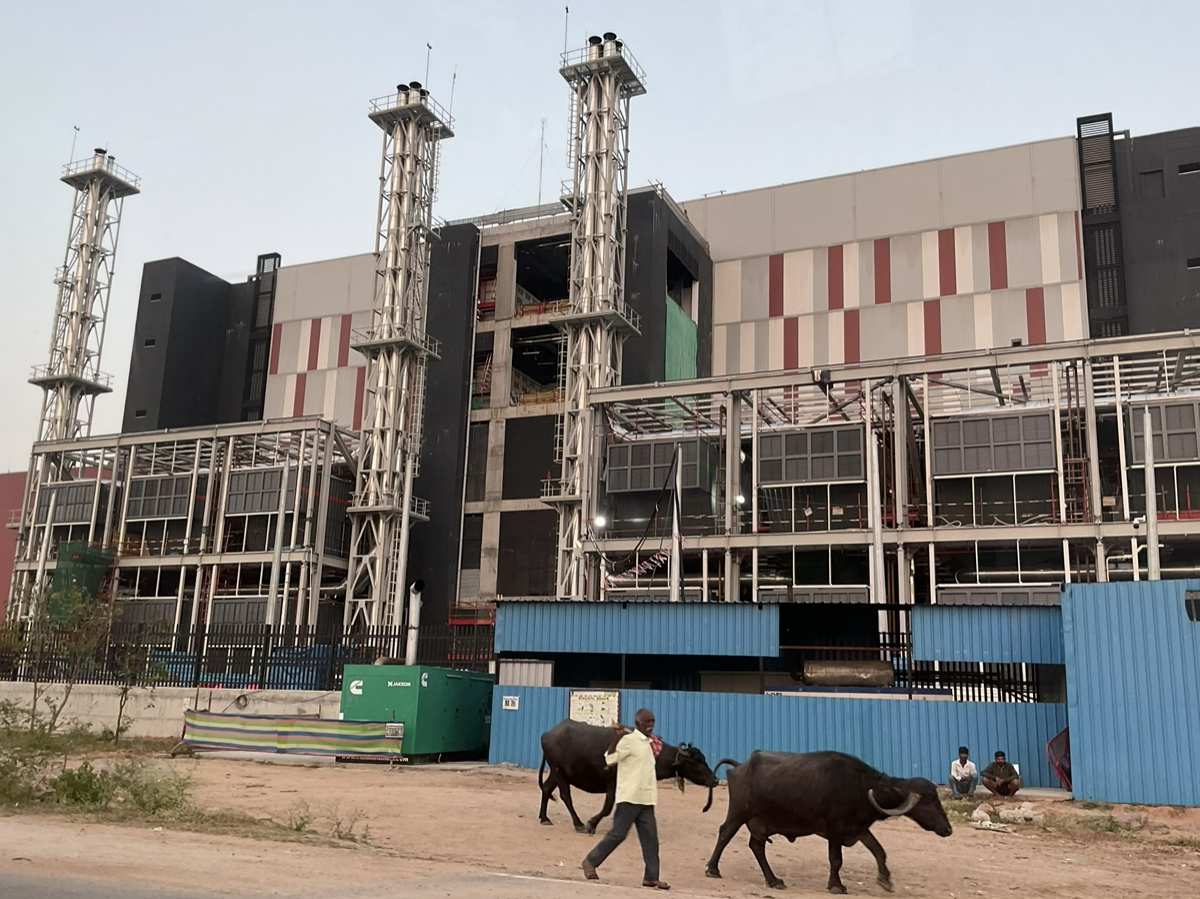
The report is based on field research conducted in two locations, Mekaguda and Begarikancha, where large-scale digital infrastructure development is increasingly transforming the local landscape. Through community interactions, field observations, and socio-environmental analysis, the study documents the ways in which data center expansion is affecting land use, access to natural resources, agricultural practices, livelihoods, and local ecological systems.
The research highlights that the establishment of data centers is not merely a technological development; it is also a social and environmental process with direct consequences for surrounding communities. In both locations, residents spoke about changing land ownership patterns, shifts in water availability, and evolving livelihood structures as agricultural spaces gradually intersect with industrial digital infrastructure.
At the same time, the report also captures the adaptive strategies emerging within communities. Some residents are exploring alternative income opportunities linked to infrastructural development, while others are modifying agricultural practices in response to changing environmental and economic conditions. These transitions reveal the complex relationship between technological growth and community resilience.
A key focus of Just AI, Just Land is the need to place community voices at the center of conversations around digital infrastructure and AI development. The report argues that discussions on technological progress must move beyond narratives of efficiency and innovation alone, and instead engage seriously with questions of environmental sustainability, social justice, and democratic participation.
The findings call for greater transparency and accountability in infrastructure planning processes, particularly in relation to land acquisition, water usage, environmental assessments, and public consultation mechanisms. The report emphasizes that communities directly affected by these developments should not remain passive observers, but active participants in decision-making processes that shape their futures.
By bringing together perspectives from technology, sustainability, and grassroots realities, Just AI, Just Land contributes to broader conversations on equitable digital development. It encourages policymakers, researchers, civil society organizations, and industry stakeholders to rethink how digital infrastructure is planned and governed in ways that are socially inclusive, environmentally responsible, and rooted in principles of justice.
At a time when AI and digital systems are becoming deeply embedded in everyday life, the report serves as an important reminder that technological futures must also account for the communities and ecosystems that sustain them.