
Dear Readers,
Let us first wish our readers a very happy and prosperous New Year.On its part, Digital Empowerment Foundation (DEF) has chalked out plans to give farmers and people living in power-dark areas in rural India some great news in 2016. Our Highlight of the Month report informs you about two major initiatives that DEF is planning to launch in the coming year.
In the first initiative, DEF will enable farmers to directly link with scientists using digital tools such as Skype. In the second initiative, DEF will energise power-dark rural areas by enabling people to tap solar energy to light up their homes or drive their irrigation pump sets or use solar power for whatever use they want.
The next big piece of heartening news is that DEF has launched a new project called DigiKala under which it will now help several skill-based clusters in India to become digitally literate and avail of digital tools. This will empower them to break the vicious circle of exploitation and low monthly incomes despite producing some of the finest handloom and handicraft products that are sought by consumers all over the world and are sold at mind-boggling prices at the retail level.
DEF has already shown the tremendous transformative potential of introducing digital tools to a similar weaver-cluster at Chanderi. Now the handloom weaver-cluster in and around Barabanki district in Uttar Pradesh, who are famous for producing exotic, high quality Zardozi products, will benefit from DEF's digital intervention. Read our report on this in the Markets & Enterprises section in this newsletter.
In our Governance & Entitlements section read about how our Soochna Seva team forced a Gram Sevak to return monies he had been swindling from the entitlements of poor and uneducated villagers. The short story highlights a long tale – information poverty often leads to actual economic poverty.
Meanwhile, DEF completed 13 successful years on 16th December, 2015. While we celebrated with a little office party at our New Delhi headquarters a day later on 17th December, CIRCs across the nation observed our Foundation Day with great gusto on 16th December. Read our report on that and other reports on CIRCs in the section on Access & Infrastructure in this newsletter.

Apart from these reports, as promised last month, we have introduced a new section called Cyber Champ of the Month from this issue of the newsletter onwards.
Our exclusive story will focus on an individual or change maker in the field of Information & Communications Technology for Development (ICTD).
This time we focus on 20 year-old Piyush Ghosh, who emerged as the youngest ever to win the prestigious Manthan Award for his newspaper The Optimist Citizen.
Another new section Digital Edge in Mint brings to you information on content being published by Mint newspaper in a weekly page created by DEF's Research & Advocacy team.
We hope to continuously improve the contents of this newsletter by bringing to you new sections that offer you interesting, informative and exclusive reports that you will not find anywhere else, including in the mainstream media. Please do give us your valued feedback so that we can make this newsletter more useful for you all.
For the moment, happy reading!

Digital Empowerment Foundation (DEF) is planning to launch two major initiatives in 2016.
The first initiative will enable farmers to directly link up with scientists by using digital tools available at Community Information Resource Centres (CIRCs) set up by DEF in remote rural areas.
In the second initiative, DEF will set up a for-profit social enterprise to enable people living in unserved and underserved areas get electricity at affordable rates by tapping solar energy.
DEF is now in discussions with Govind Ballabh Pant University of Agriculture and Technology (GBPUAT) at Pantnagar in Uttarakhand to launch a pilot project across 5 districts in the Garhwal Division and 1 district in the Kumaon Division of the state to directly link farmers to the University's scientists and field extension staff through CIRCs set up by DEF in these 6 districts.
"The plan is to make the six CIRCs in the Garhwal and Kumaon regions work as hubs through which famers in the surrounding areas can directly talk to the University's scientists using digital tools like Skype," said Shahid Siddiqui, head of DEF's Access & Infrastructure work area.
"The Krishi Vigyan Kendras (KVKs) run by the University will be used as resources. We will provide last mile delivery in remote rural areas to enable farmers to obtain information and technology inputs on seeds, package of practices for various crops, horticulture, animal husbandry, weather reports, pesticides, fertilizers, etc from the KVKs," he said.
Farmers will get the information free of cost as the University is unlikely to charge any fees for providing the information. Since the CIRCs already have the digital infrastructure for providing broadband Internet connectivity, there will be no other costs, he said. Read More

DigiKala to empower 5 weaver-clusters, starts work in Barabanki, UP
After tasting success at digitally empowering the Chanderi weaving cluster through its Chanderiyaan project, DEF initiated DigiKala in 2014 as an integrated programme to digitally empower more such weaving clusters in India. The programme has now gone to scale and has become an umbrella brand under which five specific weaving clusters are being digitally empowered in partnership with specific companies who are supporting through CSR. DEF has started work at the Brabanki zardozi weaving cluster with support from Ericsson India. It will soon start work in four other such clusters – Nuapatna and Barpali in Odisha supported by Microsoft, the Trichy handloom cluster in Tamil Nadu supported by Mphasis; and the Narayanpet cluster in Telengana supported by ISOC (Internet Society). In Barabanki district, DEF is setting up a digital skilling and design centre at a 100-year old heritage site at Saidanpur, a remote village, 28 Kms from district headquarters Barabanki and 58 Kms from state capital Lucknow. DEF is restoring the site scheduled for inauguration in January, 2016. Read more


CIRCs celebrate DEF Foundation Day
DEF completed 13 successful years on 16th December, 2015. The DEF family has become bigger, stronger and more diverse in the form of CIRCs established across the country. Many CIRCs celebrated the day in their own unique ways. Some wrote wishes and messages on chart papers and shared photographs with the rest of the DEF family, some celebrated with cakes and candles, while others conducted meet-and-greets with community people. At all CIRCs, not only the staff but people from the community too showed great interest in being part of the celebrations. Expressing their gratitude, the centres wished many more victorious years to the DEF family.
Digital literacy made accessible to minority students of Anjaiahagar
On 16th December, 2015, CIRC Anjaiahnagar, Hyderabad launched special digital literacy classes at Government Urdu Medium School situated at Sherilingampally Mandal. The community residing in this area is deprived of basic facilities and doesn’t have a separate school building where children can get computer education. Moreover, the community is quite conservative and is hesitant to send their children anywhere else besides school for digital training. In this situation, the centre staff decided to start computer literacy classes within the school. Although it took 6 months to get permission from the school authorities, today, the CIRC with the help of the MEO and school principal, is successfully delivering computer classes within the school.
CIRC Halduchaur conducts community mobilisation programmes
CIRC Halduchaur in Uttarakhand conducted several mobilisation programmes at various educational institutions. The aim of these activities was to make community youth aware of the importance of digital literacy and how it can bring a positive change in their everyday lives. The CIRC staff visited Lal Bahadur Shastri College, followed by GGIC Dauliya School and organised awareness sessions at both the institutions. These sessions were delivered by Centre Coordinator Naval and local partner Ravinder Sharma, along with Rohit Dumka, an ex-student from the centre. Not only the students, but the faculty and staff too were keen to attend the programme. Motivational films and audio-visual presentations during the awareness sessions helped make the programme more interesting.
US film makers visit CIRCs to shoot ‘One Billion Stories’ documentary
US-based film-makers Daniel Oxenhandler and Will Sloan along with DEF team members Rohit Dhall and Udita Chaturvedi undertook a day-long visit to CIRCs around Alwar on 19th December, 2015 to shoot for a documentary called 'One Billion Stories' that the duo are producing to explore the impact of India’s unprecedented expansion of network and digital technology on the country’s ability to collaborate around major social and environmental challenges. The duo had earlier shot an interview with DEF Founder-Director Osama Manzar. It was during this interview that Daniel and Will were impressed by the mention of CIRCs and expressed the intention to visit one of these centres. They, in fact, ended up visiting three such centres. Read more

Training in use of digital tools for Unnao district librarians
DEF organized a two day workshop on “Library Management and Community Engagement" on 11th and 12th December, 2015 at the PDVT Government District Library in Unnao, Uttar Pradesh. Some 35 librarians from different libraries in Unnao district participated in the workshop. DEF organised the workshop in collaboration with The Energy Research Institute (TERI), New Delhi. The primary objective of the workshop was to train participating librarians about essential digital tools that can be used for library management and increase community engagement about library services. DEF has already helped digitize the PDVT Government District Library in Unnao under its District Public Library project in partnership with Bill and Melinda Gates Foundation.

Soochna Seva participates in 100-day Javabdehi Yatra in Rajasthan
The Soochna Seva and the CIRC teams are participating in a 100-day “Paardarsita Javaabdehi Yatra” (Transparency & Accountability Campaign) that started on 1st December, 2015 and will cover more than 100 blocks across all the 33 districts of Rajasthan in 100 days. The Yatra is designed to raise awareness of the people about the RTI Act, the RTE Act and the Right to Health legislation. The Yatra is being organised by the Soochana Evam Rozgaar Adhikar Abhiyan and Rajasthan Patrika. The Yatra will be accompanied by “RTI on Wheels”, a mobile RTI clinic from the Gujarat RTI Campaign. The Yatra will devote three days to each block. Read more
Gram Sevak in Bihar forced to return swindled pension money to widower
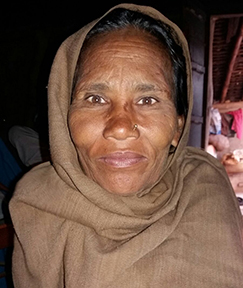
Intervention by a Soochna Seva team has forced an errant Gram Sevak in Ramnagar block of West Champaran district to return to actual beneficiaries the money he was swindling from them. The team learnt that Phoolmati Devi, 65, was not getting the entire Rs 400 per month that she was entitled to under Widow Pension scheme of the Bihar government. The Sevak, who used to collect the full pension on behalf of Phoolmati and other poor and uneducated villagers from the Block Development Officer with intervals of two or three months used to retain Rs 200-300 for himself from the entitlement of each beneficiary. The team inspected her bank passbook and found that although the passbook listed the precise amount, she was actually receiving less money. The team approached the Gram Sevak and questioned him but he refused to accept his fault and there was no official record that could prove him wrong. The team then sought the help of the BDO, who took immediate action and directed the Gram Sevak to distribute money sincerely and warned him to be careful in the future. The very next day, the Gram Sevak returned the swindled money to Phoolmati and other beneficiaries.

Folk musicians learn social media use to break middlemen exploitation
Over 90 folk musicians from villages around Jodhpur in Rajasthan have learnt about how they could use social media to directly promote and market their art to the world and thereby break the grip of middlemen who exploit them at their will. They were participating in a Social Media for Empowerment (SM4E) workshop on December 21 organized by DEF in partnership with Friedrich Naumann Foundation (FNF) and Rupayan Sansthan, the local strategic partner, at Arna Jharna – The Desert Musuem – near Jodhpur. The musicians represented the Langa, Mangniar, Kalbeliya, Dhadhi, Bhopa and Bhat communities whose traditional music has now received national and global acclaim thanks to the efforts of the late Komal Kothari, fondly remembered as Komalda, who won a Padma Bibhushan for his life-long work in conserving India's living traditions. Read more


52 Parindey covers four more innovators
DEF Fellow Rahul Karanpuriya has embarked on a year-long journey across India to identify and document the lives of 52 innovators who are making a conscious living for themselves and their planet through alternate careers in Indian towns and villages. During the last few weeks, Rahul has covered four more innovators. Moving to Haryana from Rajasthan after covering two innovators that we had reported about in our October newsletter, Rahul first stopped at Palwal, Haryana to document the story of master potter Brijendra Prajapati. Then he went to New Delhi to cover the story of grassroots educationist Deeksha Bhatia moving on to Mewar in Rajasthan to record the exploits of restaurateurs Sunny and Manoj. Finally, he moved to Udaipur to write about organic farmer Rohit Jain of Banyan Roots. Read more
Nagaland NGOs learn how to use digital tools
As part of its e-NGO programme, DEF organized an e-NGO ICT Capacity Building Workshop for non-profits in Dimapur, Nagaland on 18th December, 2015 in collaboration with local partner Youth Net, Kohima to enhance digital skills of NGOs. The workshop trained NGOs about how they can manage their websites, how they can raise funds through social media and how they can attain strong online presence which is a must in today's digital environment. Kesonyu Yhome, the young and dynamic Deputy Commissioner of Nagaland began the workshop with his inspiring words encouraging around 70 participants from NGOs to continue their eminent work and to use digital tools to improve their efficiency and effectiveness.
UP non-profits get training in use of ICT tools
DEF organized a training programme for NGOs along with its local partner Yuva Vikas Samiti in Basti, UP, on 22nd December, 2015, as part of its e-NGO programme. More than a total of 70 non-profits participated to know about how digital and social media tools can enhance their efficiency and effectiveness apart from helping them to raise more funds by becoming globally visible. In the first half giving 30 NGOs were trained on how to manage their own websites and use social media in their everyday operations. The second half saw another 40 organisations participate in a session that discussed the importance of being digitally visible. The MLA of Rudhauli, Basti Sanjay Pratap Jaiswal graced the occasion and explained how he thinks websites and social media has shown proven results on the ground and emphasized the power of social media and the difference it can make.


Workshop on Internet Rights in early February
DEF will organize a two-and-a-half day training workshop on Internet Rights and a one-and-a-half day Universal Periodic Review (UPR) Advocacy Workshop in New Delhi from the 3rd to 6th February, 2015. These workshops will bring together representatives from various human rights organizations & human rights defenders towards building a network of individuals & organizations which would raise their voices in support of issues concerned with different online human rights violations. The project seeks to promote and protect internet rights in India, focusing specifically on Freedom of Expression (FoE), Freedom of Association (FoA), the Right to Information (RTI) and Right to Privacy (RTP). The training workshop will cover a series of modules concerned with the relationship between human rights, ICTs and the internet. These modules are intended to help those who work on human rights and/or ICTs, to understand ways in which the internet is affecting the enjoyment and protection of rights – now and in the future – and explore how these affect their work.
India Country Research Report on Internet Freedom launched
At a one-day event in the national capital on the International Human Rights Day, 10th December, 2015, DEF launched the India Country Research report on Internet Freedom titled "Internet access limits free expression" and held a multi-stakeholder consultation on “Understanding the Freedom of Expression Online and Offline”. The event was inaugurated by DEF founder-director Osama Manzar where he spoke about the background and methodology adopted to prepare the report. While talking about the methodology he highlighted that the Association for Progressive Communication (APC) - Frank La-Rue (FLR) framework had been adopted to guide research, evidence collection and mapping of laws and policies in 10 states of India for preparing this report. He said 600 respondents were also interviewed to understand ground level realities. Read more
Freedom of expression online and offline discussed at 10th IGF in Brazil
DEF, represented by Ritu Srivastava, participated in the workshop "Freedom of Expression Online: Gaps in Policy and Practice" at the 10th Internet Governance Forum of the United Nations in Joao Pessoa, Brazil in November, 2015. During the 4-day event, DEF along with the Association for Progressive Communications (APC), Bytes for All, Pakistan, and Derechos Digitales organised a session aimed at understanding how freedom of expression and other human rights are realised in the online context and how these rights are being practiced in countries like India, Pakistan, Malaysia, Brazil and Mexico.


Limited Internet access limits free expression
India needs to improve the right to freedom of online expression, according to a survey by the Digital Empowerment Foundation, which was conducted in 10 states among some 600 respondents, besides taking inputs from other stakeholders and secondary data. The findings are revealing because awareness of rights is high among Indians, who are also concerned about digital privacy. Read more
India lags in technological readiness
Although India jumped 16 places to 55th rank in this year’s Global Competitiveness report, it fares poorly in technological readiness. It is one of the least digitally connected countries in the world, languishing at the 120th spot. Fewer than one in the five Indians access the internet regularly and fewer than two in five own even a basic cell phone. Read more

Piyush Ghosh, the youngest ever to win a Manthan Award
Meet Piyush Ghosh, 20, founder of The Optimist Citizen newspaper and a winner in the e-News & Journalism category at the Manthan Award 2015. He is, perhaps, the youngest ever to win this prestigious award. His newspaper focuses only on positive news and change makers. The newspaper has both a print media version and an online version. In just one year his newspaper has more than 3,000 offline subscribers for the print version and few thousand online subscribers with about 20 subscribers from abroad – mainly from the US, the UK and Dubai. He is our Cyber Champ of the month. Read more

National Social Assistance Programme
The National Social Assistance Programme (NSAP) which came into effect from 15th August, 1995 represents a significant step towards the fulfillment of the Directive Principles in Article 41 of the Constitution. The programme introduced a National Policy for Social Assistance for the poor and aims at ensuring minimum national standard for social assistance in addition to the benefits that states are currently providing or might provide in future. NSAP at present, comprises Indira Gandhi National Old Age Pension Scheme (IGNOAPS), Indira Gandhi National Widow Pension Scheme (IGNWPS), Indira Gandhi National Disability Pension Scheme (IGNDPS), National Family Benefit Scheme (NFBS) and Annapurna.

India Development Alternatives Foundation
The India Development Alternatives Foundation (IDAF), Kanpur, UP aims to bring about social change through participative involvement of development experts from various sectors. The core objective of IDAF is to bridge the digital divide by using ICT for social and economic uplift at the grassroots level. Since 2006, IDAF is working towards finding out the alternative means of development for marginalised people and is trying to help the disadvantaged and weaker sections of society to improve their quality of living.
To know more about India Development Alternatives Foundation (IDAF), visit http://www.idaf.ngo/
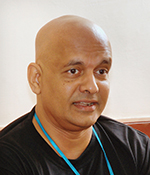
India is now the fourth largest start-up hub in the world, with a wide range of startups in mobile media, Internet of Things, analytics, ed-tech, food-tech and more. Social entrepreneurs and NGOs are also active on the mobile front, backed by a range of venture capitalists, government grants and impact investors. “India is fast becoming a nation of creators as well as consumers,” says Hindol Sengupta in his new book, ‘Recasting India.’ The combination of mobiles and analytics offers huge potential for India. We are now entering the era of data-powered farming, via large scale open data sets on weather and yields, IoT, drones and smart tractors. Wireless digital tools will be as important as traditional farming tools in the agricultural sector. Read more

Ocean in a Drop

Arogya Sakhi
To stay updated with DEF Founder-Director's columns, featured this past month in Mint newspaper, click here
To follow DEF's coverage in media, click here
Click here to read interesting facts and figures from the digital world, published in collaboration with Mint newspaper.

House No. 44, 3rd Floor Kalu Sarai, (Near IIT Flyover),
New Delhi – 110016
Subscribe to our mailing list
Email : def@defindia.net | URL : www.defindia.org
Tel: +91-11-26532786 | Fax: +91-11-26532787


