


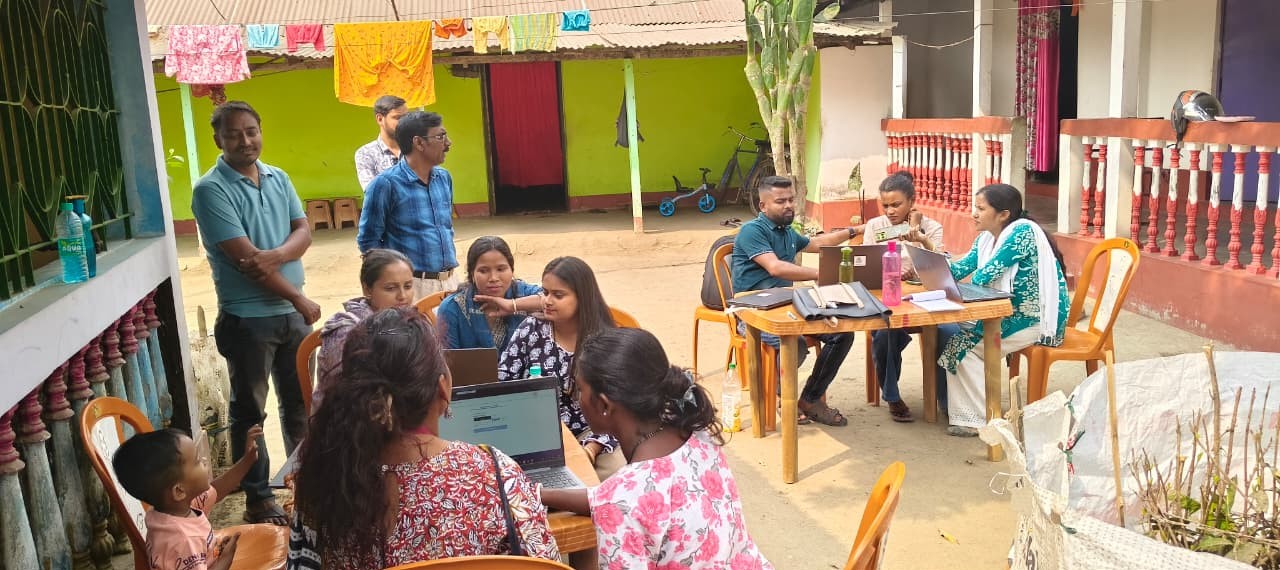
In the lush tea garden communities of Jalpaiguri, where access to essential services has often been limited, a quiet transformation is taking root led by local women stepping into the role of digital changemakers.
“Today, we learned about various digital services that we will be providing to community members in our Tea Garden. Services such as PAN card applications, health card support, insurance-related information, and other essential digital facilities were new to me earlier. After joining DEF as a SoochnaPreneur, this training has enabled me to confidently deliver critical digital services and help reduce the digital gap in our community,” shares Maya Kumari Jha, reflecting on her journey with determination.
Maya is among a group of newly joined SoochnaPreneurs who recently participated in an advanced handholding training session in Jalpaiguri district. The training was designed not just to inform, but to empower equipping participants with the practical skills needed to deliver digital services effectively within their communities.
Through interactive demonstrations and guided practice, the SoochnaPreneurs gained hands-on experience in accessing government schemes, processing essential documentation, and navigating digital platforms. What once seemed unfamiliar is now becoming second nature, building both competence and confidence.
Beyond technical skills, the training emphasized a deeper purpose: the role of SoochnaPreneurs as trusted digital facilitators. In remote tea garden communities, where awareness and access are often barriers, these women are emerging as reliable sources of support, helping others connect to vital services and opportunities.
For Maya and her peers, this journey is about more than learning new tools; it is about creating meaningful change. Each service delivered, each form filled, and each question answered brings their community one step closer to inclusion and self-reliance.
Through such capacity-building initiatives, the seeds of digital empowerment are being sown at the grassroots level—fostering local leadership, strengthening last-mile access, and enabling rural women to lead the way toward a more connected and equitable future.