


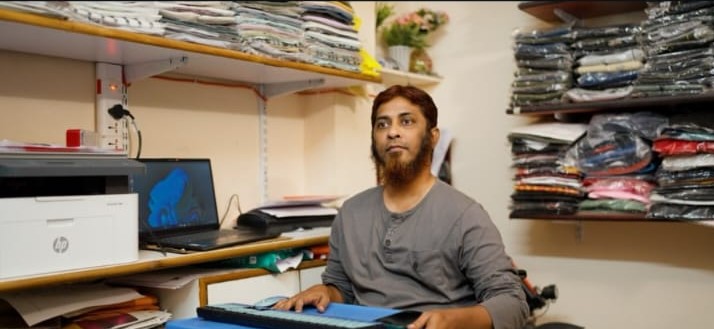
For Mohammed Jahangir, a spinal cord injury once placed significant limits on mobility, making access to work and independence feel distant. But access is not just about physical movement, it is about whether systems are designed to include or exclude.
With the right digital infrastructure in place, his story began to change. Through the Hope 50 Project(initiative supported by EquallyAble Foundation and implemented by Digital Empowerment Foundation). Jahangir transformed his home into a Digital Service Centre, creating a local access point for essential services. What was once a barrier became an entry point, not just for him, but for his entire community.
Today, he delivers Aadhaar services, online applications, bill payments, and more, bridging the gap between people and the systems they rely on. His work reflects the power of localized infrastructure, where connectivity, platforms, and accessible tools come together to enable participation at the last mile.
Jahangir’s journey is not only about resilience; it is about what becomes possible when infrastructure is inclusive by design. It shows how digital systems, when brought closer to people and made accessible, can shift individuals from being excluded to becoming enablers of access for others.
This is what meaningful digital access looks like, not distant networks, but human-centered infrastructure embedded within communities, creating pathways to dignity, independence, and opportunity.