


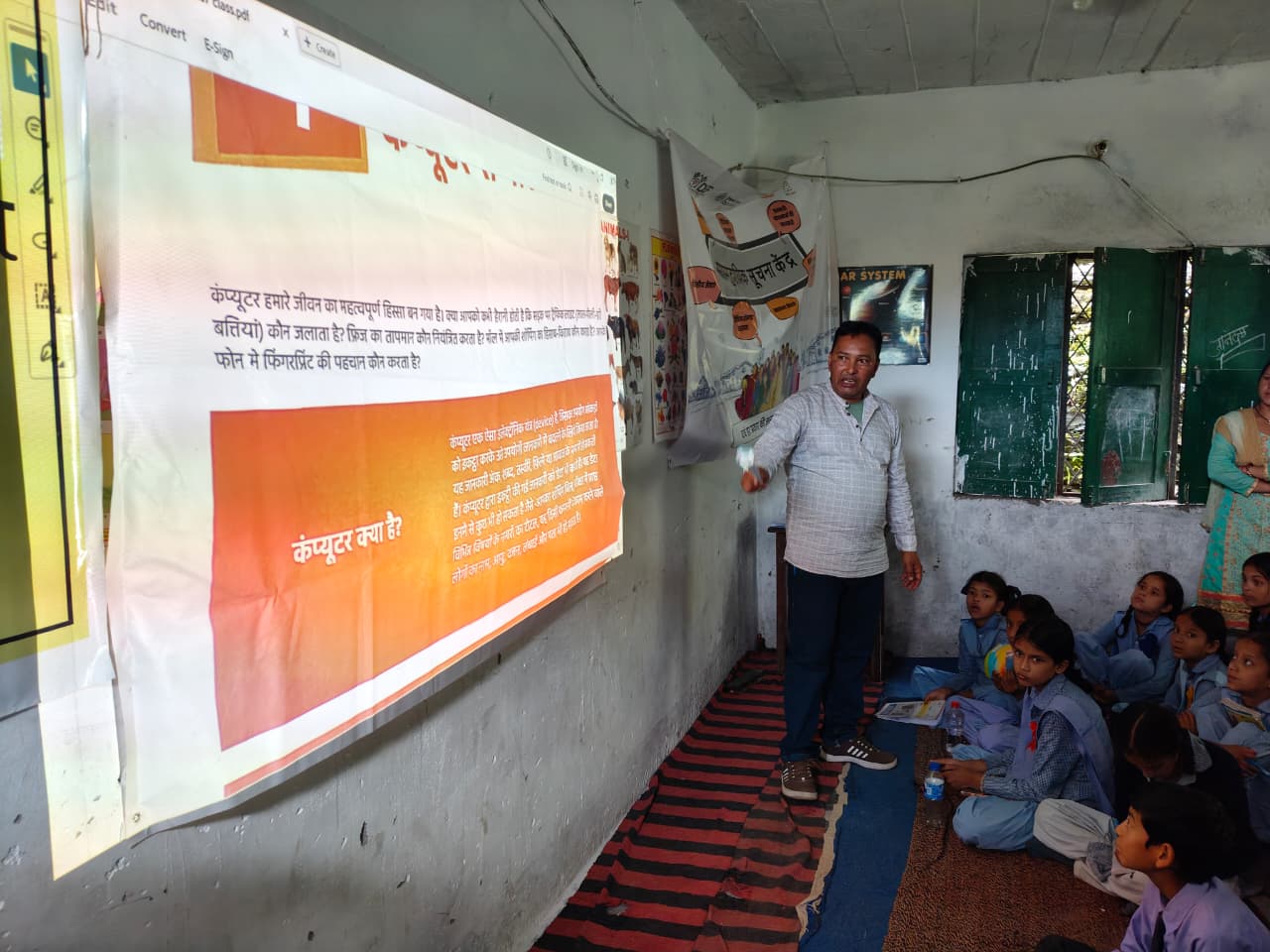
In the remote Himalayan town of Dharchula, where steep paths connect scattered homes and the river marks both a boundary and a lifeline, education had long been shaped by geography. Schools existed, but access, resources, and exposure, especially to the digital world, remained limited.
A quiet shift began when a group of educators, community volunteers, and local leaders came together with a shared goal: not just to provide schooling, but to expand what education could mean.
They partnered with a nearby government school, working closely with teachers rather than replacing them. The idea was simple—strengthen what already existed, and build new layers on top of it. Classrooms that once relied solely on chalk and blackboards slowly began to include digital tools: tablets, offline learning modules, and basic computer systems powered by solar backup.
The initiative wasn’t about technology for its own sake. It focused on digital literacy as a bridge, to information, to confidence, and to opportunity.
Children who had never touched a computer learned how to type their names, explore maps, and watch science concepts come alive through visuals. Teachers, too, became learners—attending training sessions on how to integrate digital tools into everyday lessons without losing the human connection that defined their classrooms.
Importantly, these classes didn’t feel separate from the school—they became part of its rhythm. A math lesson might shift from the blackboard to a simple interactive module. A geography class might include exploring nearby regions through digital maps. Gradually, curiosity replaced hesitation.
The effort extended beyond students. Evening sessions were organized for parents and other community members, introducing them to basic smartphone use, online safety, and access to government services. For many adults, this was their first step into the digital world, one that made everyday tasks less intimidating and more empowering.
There were challenges. Internet connectivity was inconsistent, electricity unreliable, and skepticism natural. But the program adapted—using offline resources, flexible schedules, and continuous dialogue with the community.
Over time, the impact became visible in small but meaningful ways.
Students began asking different kinds of questions. Teachers experimented more confidently. Parents took greater interest in schooling. Education was no longer seen as confined to textbooks, it became something dynamic, relevant, and connected to the wider world.
In Dharchula, the change didn’t arrive as a sudden transformation. It grew steadily, shaped by collaboration and trust. By working with the local school instead of around it, the initiative ensured that progress was shared, not imposed.
And in that shared effort, education became more than access, it became empowerment, rooted in community and reaching far beyond the mountains.